A Secular Epic
On seeing The Odyssey

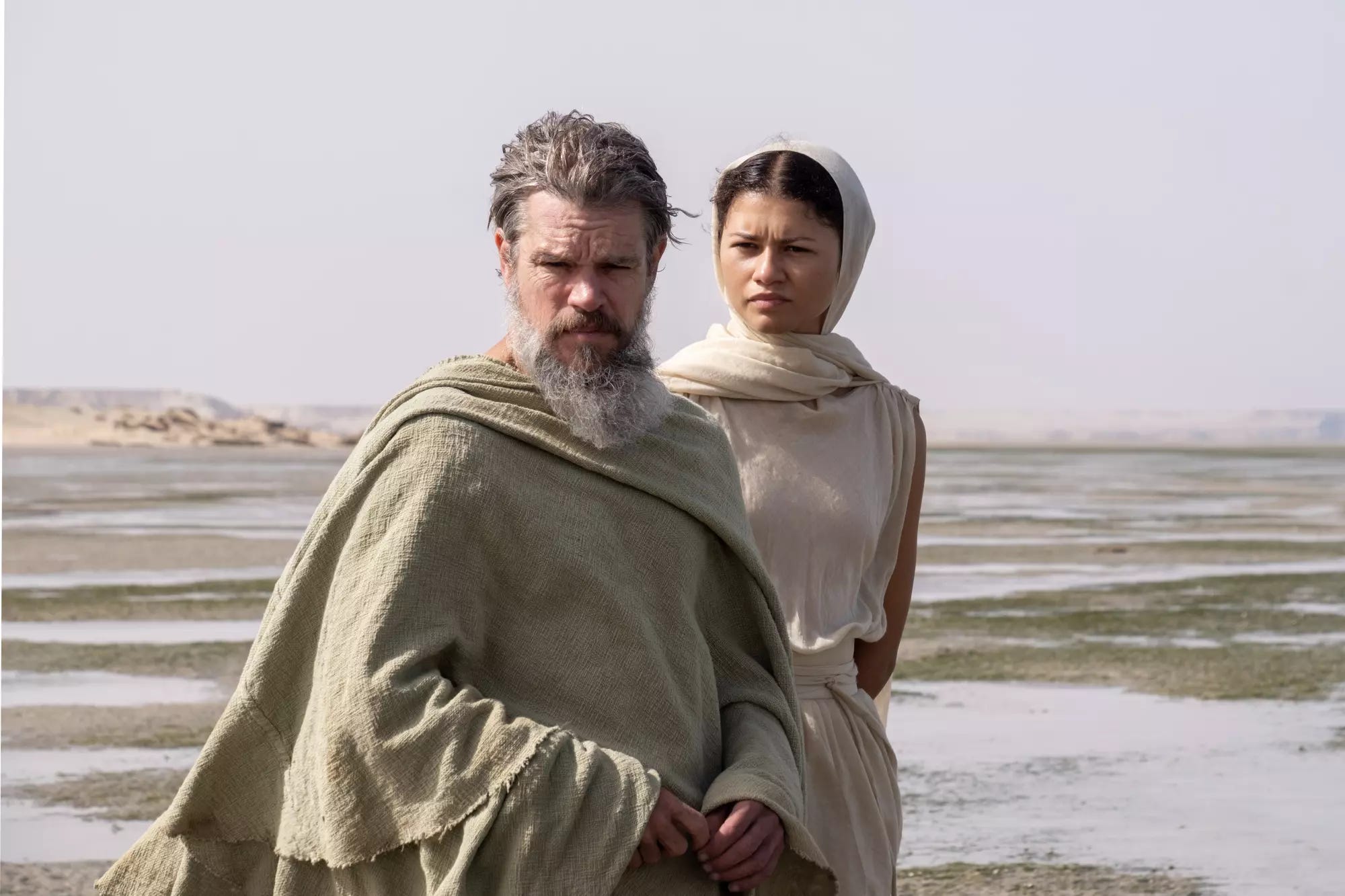
Christopher Nolan’s The Odyssey now sits atop the box office, and—like millions across the country—I saw it on Friday night. Prior to watching the film, I went out of my way to read nothing about it, trying especially to avoid the culture war about whether it was “woke” or not. In retrospect, I think that latest cultural battle missed much of what was interesting (including interesting to argue about) in the film. Nolan thoroughly rewrites and reimagines The Odyssey, turning it from a pagan tale of gods and colossal personalities into a very contemporary epic about trauma, extraordinary violence, and civilizational decadence.
As Daniel Mendelsohn has noted, Nolan deliberately wanted this film to appeal to the “modern audience.” The world of The Odyssey (the film) is simply much less alien than that of Homer’s poem. The characters are mostly understandable within a humanistic, Judeo-Christian framework. The only god seen directly is Athena, and the film leaves unresolved whether this is simply a figment of Odysseus’s imagination. Human beings attribute things to the gods throughout the film, but we do not see them directly. There is the fantastic—the Cyclops, the witch Circe, the sirens, the shades of the underworld—but we do not see the gods as full-bodied characters the way they are in Homer.
This modernization also affects the characters. The Homeric heroes are larger-than-life figures—they are our passions, appetites, virtues, and vices magnified. Odysseus is endlessly clever, curious, and committed. He shivers with tears and with anger. He leaves Calypso’s earthy paradise to venture home and slaughters the suitors in apocalyptic vengeance—but he also has sex with nymphs and witches on his path back to his wife. He is both supremely hardy and surprisingly fragile.
That is not quite the Odysseus of Nolan’s film. In part because of Nolan’s narrative adaptations, he doesn’t have some of the same opportunities for cleverness or devotion. (For instance, he doesn’t parry Calypso’s arguments for why he should stay on Ogygia with her.) He’s a more introspective and brooding character, and Matt Damon has none of the mischievous glee I normally associate with Odysseus. He’s much more burdened by guilt.
Damon’s Odysseus incorporates one of Nolan’s favored archetypes: the Traumatized Man grappling with his inner injury. That’s Batman. That’s Oppenheimer. That’s Leonard Shelby from Memento (who, like Odysseus in this adaptation, also struggles with forgetting). That’s Dom Cobb from Inception. In that respect, it’s not surprising that Nolan adapted The Odyssey. Odysseus is a traumatized man, and that sense of inner injury is, in fact, part of the original poem. In Book Eight, Odysseus breaks down in tears as he hears a bard sing of the sacking of Troy. Later on in Book Eleven, as he recounts the story of his voyage to the underworld, he tries to break off before telling of his encounters with his comrades from the Trojan War. Clearly, something about that war cuts to his heart.
Many of Nolan’s narratives are structured toward some moment of epiphany for the Traumatized Man, when he will at last see that inner wound with clarity. That’s the case with The Odyssey, much of which is constructed around Odysseus trying to remember his traumatic journey. At last, he remembers Penelope in full. Later, when he arrives back at Ithaca, perhaps the culminating moment of recognition occurs when he tells Penelope about the destruction of Troy. It’s one of the most arresting sequences in the film, and it offers a glimpse of the brutality of war.
The Odyssey taps into another favorite theme of Nolan: the role of extraordinary violence in a decadent society. The story of his Batman trilogy is in part that tale of extraordinary violence. Batman fashions himself as a figure outside the order of law who acts on behalf of the law in a thoroughly corrupt Gotham. The tensions of that position are extraordinary, and the breakdown of Bruce Wayne’s own body is a testament to the costs of that position. Like many a John Wayne character in a Hollywood Western, Nolan’s figures of extraordinary violence fundamentally cannot be integrated into the rest of the world. That is why Bruce Wayne has to give up being Batman and retreat to Italy with Catwoman.
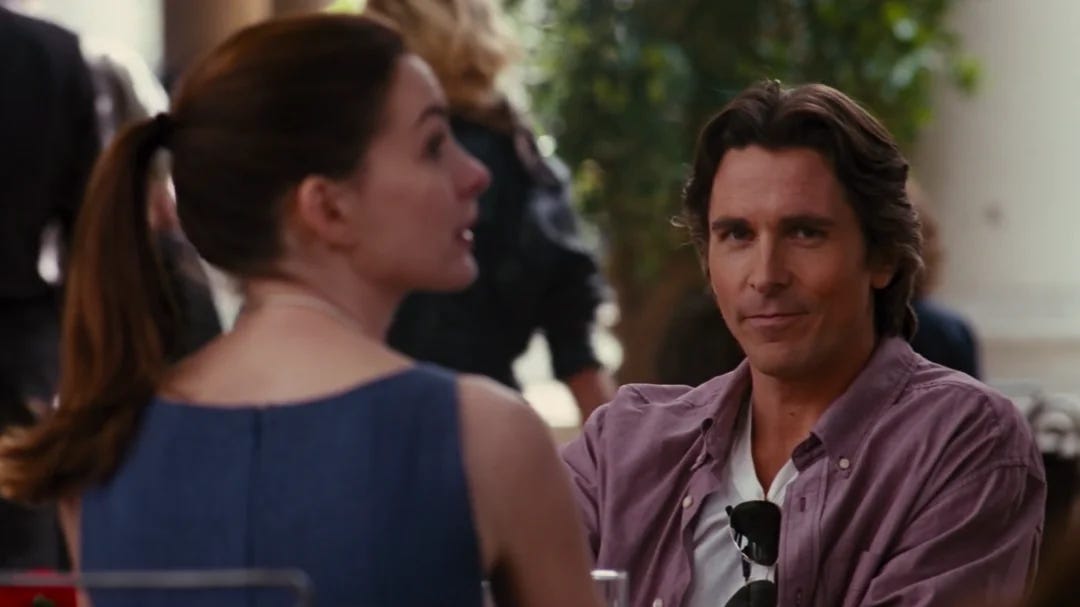
The Odyssey follows a similar path. Odysseus wreaks his vengeance and (in a break with the poem) pointedly does not let Telemachus partner with him in the slaughter. Instead—just like Batman—Odysseus shoulders the burden of extraordinary violence for himself and then leaves Ithaca. This is a profound inversion of Homer’s poem, which concludes with Odysseus’s homecoming and Athena intervening to put a stop to the cycle of vengeance. Instead, the Odysseus of Nolan’s film sets off voyaging again (like the title character of Tennyson’s short poem “Ulysses”).
I think it’s critical here that Nolan portrays the Greek world as, like Gotham, fundamentally decadent (at one point, the characters even talk about the end of the Bronze Age). In a time of decadence, the seeming virtues of extraordinary violence might gleam like cubic zirconia: if only a hero could set things aright. Of course, the practitioners of extraordinary violence often do not set sail with their wives for further shores once their task is done. Instead, they build shining palaces for themselves and dim prisons for their enemies.
Nolan is one of the great auteurs of decadence. The Dark Knight Rises invokes the tensions that would eventually pull the neoliberal era asunder. Clearly, a shadow over The Odyssey is the fear that the broader global order is falling apart. The characters speak about the end of trade and the growing specter of war. (On a geopolitical level, one of the more urgent tasks for any “realignment” project going forward is building a mode of international affairs that reinforces national resilience while nevertheless maintaining critical international networks—that is, to resist the siren song of amoral familism on a global scale.)
Nolan’s The Odyssey is modern and in many ways secular, so it differs from Homer’s poem. Whether that difference is a deficiency is, of course, up for debate. But, for all those differences, it achieves an epic quality. I was never bored watching the movie, and some of the scenes (the destruction of Troy, the voyage to Hades) were striking and memorable. For all his interest in decadence, Nolan also shows that film is not yet an entirely decadent medium. He takes film seriously and—perhaps more importantly—he makes movies that are worth watching seriously. You come away from Oppenheimer or The Odyssey actually thinking about it. In this slop-filled time, that’s a considerable accomplishment.
I hope this film will inspire other studios and filmmakers to rise to the challenge of cinema’s enchantment. People will show up to watch a movie if it is imaginative, well-crafted, and treats its audience with respect. And what’s next for Nolan? Christopher Scalia recently suggested Ivanhoe could be a good option. I saw someone else on social media (I forget who, or I would link him/her) recommend Infinite Jest. Both are also about the Traumatized Man—though each ends with that person being integrated into the world instead of going out on some self-appointed exile. Perhaps there’s an opportunity there for the director of this thoroughly modern Odyssey.